Pitot tube pumps use a rotating casing and stationary pitot tube to convert fluid velocity into pressure. They are used in selected high pressure low flow industrial applications where engineering evaluation is required.
Request Engineering Review View Pitot Tube Pump Solutions
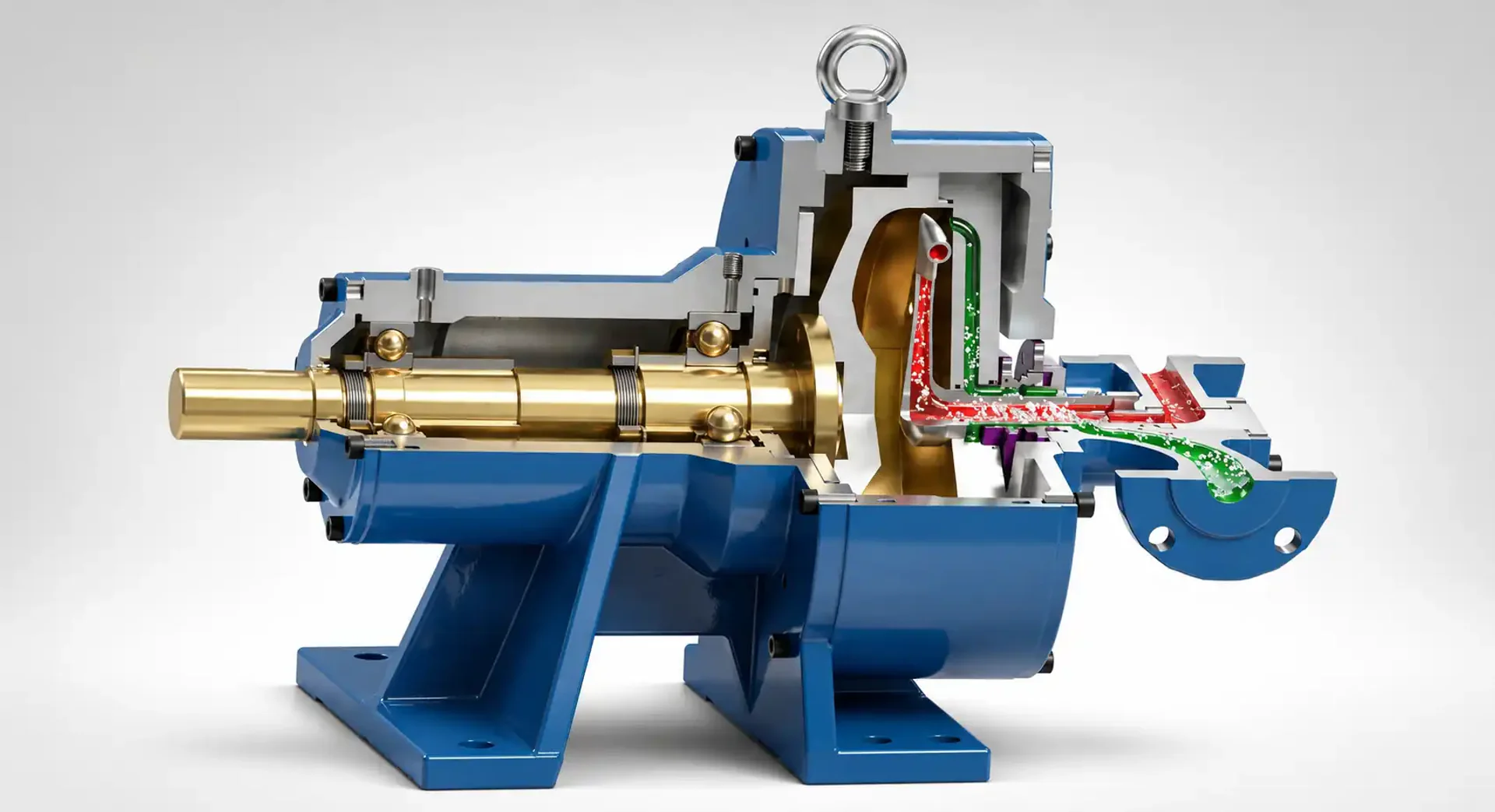
A pitot tube pump is a centrifugal pump technology that uses fluid velocity and a stationary collection device to generate discharge pressure. It is commonly reviewed for industrial services where high pressure and controlled low flow are required.
The rotating casing accelerates the liquid and creates the velocity field required for pressure conversion.
The stationary pitot tube collects high velocity liquid from the rotating casing.
The collection area receives the captured fluid and directs it toward the discharge path.
The pressure conversion section helps convert velocity energy into useful discharge pressure.
Process liquid enters the casing and begins moving with the rotating chamber.
The rotating casing accelerates the liquid, increasing velocity energy within the pump.
The stationary pitot tube captures the moving fluid from the rotating casing.
Velocity energy conversion produces discharge pressure for the industrial process.
Pitot tube pumps are often evaluated as a high pressure low flow pump option when the process requires low flow high head requirements, stable industrial process operation, or a different approach from conventional pump selection.
Selected high pressure low flow pump applications require controlled flow while maintaining high discharge pressure or head.
Process services may require careful pump selection based on duty cycle, control method, and operating limits.
Fluid properties such as viscosity, entrained gas, solids, or contamination should be reviewed for each application.
Pitot pump technology may be reviewed in a Roto-Jet replacement evaluation or a multistage pump replacement review.
Pitot Tube Pump: Velocity energy conversion.
Traditional Centrifugal Pump: Impeller-based pressure generation.
Pitot Tube Pump: Reviewed for selected high pressure low flow applications.
Traditional Centrifugal Pump: Suitability depends on pump curve, impeller design, and operating point.
Pitot Tube Pump: Maintenance review depends on configuration, seals, and fluid conditions.
Traditional Centrifugal Pump: Maintenance depends on bearings, seals, impeller condition, and service environment.
Both technologies should be selected based on flow rate, pressure, fluid properties, suction conditions, materials, and site requirements.
Pitot tube pump selection should be based on complete operating data. Engineers should review the process requirements before confirming configuration, materials, and performance expectations.
Normal, minimum, and maximum flow requirements.
Required discharge pressure, total head, and suction conditions.
Fluid name, chemistry, vapor pressure, and compatibility requirements.
Normal and maximum operating temperature.
Viscosity at operating temperature when available.
Entrained gas, solids, contamination, or slurry details.
Metallurgy, elastomers, seals, and project standards.
The casing rotates with the liquid and increases its tangential velocity. This moving liquid provides the velocity energy that the stationary collection element uses for pressure recovery.
The stationary pitot tube intercepts part of the high-velocity liquid inside the rotating casing. Its passage slows and directs the liquid so that velocity energy is converted into discharge pressure.
Liquid first gains velocity from the rotating casing. As the stationary pitot tube captures and decelerates that flow, part of the kinetic energy is recovered as pressure energy.
A conventional centrifugal pump normally uses a rotating impeller followed by stationary passages to develop pressure. A pitot tube pump rotates the liquid-filled casing and uses a stationary pitot tube for collection and pressure recovery.
The operating principle alone does not establish hydraulic suitability, suction margin, material compatibility, seal selection, or power demand. Selection should be confirmed against flow, pressure, fluid properties, temperature, suction conditions, and the required operating range.
Send your operating conditions, fluid properties, and application requirements for engineering review.